Beyond speculating the ups and downs of the market, there seems to be a disjoint in most peoples’ thoughts about the future of the real estate market, and more importantly, its future buyers.

The future of the real estate market is dependent on an availability of properties, but also on the presence of an actively participating buying and selling population…which, at this point, is looking feeble at best due to the weight of insurmountable student debt that the next generation of buyers are dragging into the market by their ankles. Now, buying a house could potentially slip right off the list of practical goals for many of those who are classified as ‘the next generation’. After all, when weighing out paycheques, these future buyers are likely to contribute to their existing (not to mention huge) debts; and that’s a hindrance the market will unfortunately have to absorb one way or another.

The actuality of this more-than-slight oversight has manifested itself into what will be a pretty huge speed-bump in the potential future of the property market. While currently being sustained by a generation of predominantly successful and career-achieved individuals, this is about to shift to a large population of over-educated, under-paid and unemployed individuals. Scary isn’t it?

Conceptually, buying a house became even more intimidating for this debt-ridden generation when the amortization laws became even more constricted this past year. Even by cropping the amortization lengths by only 5 years, this translates into a whole lot more money that nobody (at least in this crowd) seems to have. Only time will tell if the student debts will gradually dissipate in time for this population of potential property investors to pick up their socks and put their money where their (poorly fed) mouths are. Hopefully the amortization laws will also become less stringent to give some lee-way for the market to absorb this hiccup and further encourage/ease the next batch of buyers and sellers into the market.


image courtesy of limaoscarjuliet

via Vancouver Sun

An environmental program started by employees in 2006 has reduced energy consumption, water use and waste sent to the landfill at Cadillac Fairview’s Vancouver properties, the property management firm said Monday.

Cadillac Fairview’s Green At Work program began in 2006 at the company’s Waterfront Properties in downtown Vancouver. The program measures the company’s environmental impact and sets benchmarks to improve performance. Today it operates nationally, including at all of the Vancouver office properties managed by Cadillac Fairview (The Vancouver Sun is a tenant in Cadillac-Fairview-managed 200 Granville Street).

“At Cadillac Fairview we recognize that designing and operating our properties sustainably is both the right thing to do and the smart thing to do,” said Ultan Kampff, general manager, Pacific Centre and HSBC Building, Cadillac Fairview. The program works to reduce energy consumption and waste, improve environmental protection and encourage sustainable procurement.

Kampff said the program’s benefits include decreased operating costs, greater tenant loyalty and a healthier workspace.

“Employees today want to know they are working for a company that believes in sustainability,” Kampff said. “Tenants who occupy space in our buildings want to be able to tell staff that they are working in a building that’s operated by a landlord that cares about the environment.”

Financial rewards are given to facilities and employees when targets are met. For example, an operations manager in a building would be given a target to reduce the use of electricity, Kampff said. The manager might use strategies ranging from reminding staff or tenants to turn off appliances when they are not in the office, to suggesting using more efficient light bulbs or purchasing more efficient heating or air conditioning machines. If the manager meets or exceeds their targets, they would get a bonus, Kampff said.

Maury Dubuque, senior vice-president of office leasing at Colliers International, said virtually every client Colliers deals with considers green initiatives in the office a priority. There are two reasons for this, he said.

“Virtually every tenant of scale that we deal with has a corporate social responsibility platform, for one,” Dubuque said. “The second thing is that the younger generation — the millennials — demand it.”

He said the younger generation demands that their employer take sustainability seriously and that they have at least some environmental initiatives, such as paper recycling, composting or providing electric vehicle charging stations.

Nationally, Cadillac Fairview decreased energy consumption by 12 per cent and diverted 70 per cent of all waste away from landfills, Kampff said.

This month, the HSBC Building at 885 West Georgia St was certified LEED Gold in the Existing Buildings: Operations and Maintenance category. At that building, energy use was reduced 12 per cent from 2008 to 2012, while water use was reduced 27 per cent. The recycling rate was 65 per cent and 98.5 per cent of all waste was diverted from landfills in 2012, the company said. The 24-storey HSBC Building, built in 1986, contains both office and retail space and a large atrium entrance.

Cadillac Fairview owns and manages more than $21 billion of commercial real estate, including nearly 46 million square feet of leasable space in 79 properties across North America. The company plans to have all of its buildings within the Pacific Centre complex LEED certified by 2015.

[email protected]

Twitter.com/tracysherlock

image courtesy of stevecadman

During our recent sessions of crawling the internet, we seem to encounter more and more ‘lifechanging’ pieces of advice being thrown around to try and help agents and real estate stay on top of their game and innovate the industry…but what happened to just keeping it simple?

It seems that anybody spending too much time in front of a computer or on their smartphone now feels the need to share their ideas on a large scale to pollute the minds of those around them with their fixated ideas. We’re here to tell you to stop listening and start thinking. For instance, if you encounter a headline that resembles the following: 4 reasons Google+ beats out Facebook for real estate, you should probably put your noodle to work a bit before devouring this information like it’s your last meal.

‘Why? What’s wrong with that?’ You’re asking. Now think harder…

There it is! The size of Facebook and Google+’s user base is NOT EVEN COMPARABLE. So just because one self-declared tech expert decides to share their shallowly produced ‘innovative marketing techniques’ just take a step back and question them. Everybody nowadays is a marketing expert, so take what you read with a grain of salt. If it doesn’t sound like something that will work for you, then don’t do it.

It doesn’t take much for a good idea staring you in the face to make a lasting impression, so stick with what seems genuine and thought through rather than adopting a million-and-one different ideas, downloading hordes of productivity apps, and getting roped into the ‘social/e-marketing tips’ newsletter trend.

If you’re having trouble recognizing a new idea, let’s give this one a shot and see if you can see the difference between ‘those guys’ and our guys. Check out our new Deal Manager paperless office solution for agents and brokers. Simplify your business, shrink your briefcase, and save on paper. It’s that simple.

image courtesy of Victor 1558

It’s no secret now that public opinion if shifting in favour of a potentially greener tomorrow. With technological advances in electric and battery-powered technology, we have now reached a transitional phase in energy usage where we’re slowly moving towards these less detrimental alternatives. However, despite these improvements and the shift in public demand, it appears that the people who have the power to make the full ‘switch’ from fossil fuels to electric alternatives don’t show much care for the latter. Which seems strange considering that even the US Military are making strong efforts to achieve much ‘greener’ practices.

In spite of the obvious advantages to switching environmental gears, the practices in place that not only encourage the ravaging of the planet in search for oil are in fact helping these multi-billion dollar corporations save obscene amounts of money through a clause that was introduced in the 90’s to encourage the then-suffering oil industry. However, now that that this industry is booming beyond fathomable capacity, the same courtesy is not being given to the encouragement of sustainable technology and energy, while oil companies reap larger profits AND larger government gratuities year after year, regardless of this obvious disjoint in policy. So what can we do to shift these large sums of money the oil companies are benefiting from and shift them in a greener direction?

The only real answer to this question is for all of us to keep on the same course, and to encourage those who are taking a stand against the grain, like UPS, who just launched 100 electric delivery vehicles in California, taking numbers of their fleet of alternative-energy and sustainable vehicles up to nearly 2,500. We can also consider divesting in oil research and companies, and take our money elsewhere in hopes of a cleaner future.

For more information on divesting, read here –> http://www.treehugger.com/corporate-responsibility/why-fossil-fuel-divestment-key-climate-progress.html


image courtesy of ReindeR Rustema


In the event of foreclosures or long-standing ‘For Sale’ properties, things aren’t always going to sail as smooth as they seem. Due to the peculiar nature of human beings, there’s never a set in stone safety measure that can be taken to avoid the property owners suffering beyond the scope of their house being foreclosed, or sitting on a property for months waiting for it to. That’s painful enough.

Unfortunately when you add people, poverty and/or curiosity to the mix, there’s an off-chance your property awaiting a buyer may in fact sprout an under the radar resident, or two, or three… It’s not an uncommon scenario for massive homes to host visitors without the owners being aware of it, but it gets even stranger when these squatters are able to stick around through legal loopholes. Apparently squatters have rights? More on that here–> http://www.managementtrust.com/blog/bid/94855/SQUATTER-S-RIGHTS

Another weird thing that can happen as the victim of a foreclosure is somehow getting stuck with the bill for the house you got forced out of. Yes, your foreclosure can somehow come back to haunt you…or at least your wallet. See, the way this works is that during the foreclosure process if the ownership isn’t transferred then the original owner despite their non-residency is responsible for paying property taxes and fees. Just what you need after having your house foreclosed! This is actually so common that there are nearly 2 million homes in the US that started the foreclosure process and never ended up concluding it.

Doesn’t it seem like these situations would easily be prevented with a few policy changes? You’d think there’d be a bit more care given to assuring the well-being of such large investments, no?!

Would you like to see these policies revisited to avoid potential problems down the road? Share your thoughts with us on Twitter @enviromint.


image courtesy of Sean MacEntee

We tend to focus a lot of our efforts talking about clean energy and other environmental issues on our blog; however this week we’re talking about something that we have a lot more to do with: Trees.

As mentioned in a new post by TheEnvironmentalBlog.org, the demand for wood is likely to triple between now and 2050; a frightening projection based on the global increases in population and in bio-energy.

The unfortunate reality of seeking alternative methods to improve sustainable construction and design, is that ‘renewable’ resources such as trees will be turned to, as their consumption is essentially less harmful that other possible alternatives. However, it would seem that in order to achieve this projected increase in demand that preemptive planting must ensue to sustain the supply and demand; a concept that we’re pretty certain hasn’t caught on yet.

As it stands wood is a very important and highly used resource, yet these methods have a potential expiry date, should measure not be taken to sustain the usage of these materials. In order to meet the potential demand, resource providers must start preparing for this presumed increase should they wish to stick around when their sector booms in popularity.

If you feel that you’d wish to help the issue, you needn’t look far. Schedule a demo today to find out how Enviromint’s paperless office solution can not only save you money on paper and office supplies, but prevent waste, and save some trees for later down the road. Every paper counts, so improve your business today to see a greener tomorrow.

For more real estate and environmental news, check us out on Twitter @enviromint


image courtesy of jeeheon

Water.org has recently released a video in which Matt Damon announces he will be protesting for clean water by no longer using his toilet. Yes, that’s right.

No toilets = improve the environment? Not exactly; this is more of a humanitarian protest than an environmental one (though it does have environmental ties), as the purpose is to raise awareness to the fact that there are billions of people in the world who don’t have access to toilets or clean water.

However, if you’re looking to do your part in environmental improvement and want to keep using the bathroom, there’s a way you can help. Sign up now for a free demo to learn more about Enviromint’s paperless office solution so you can keep your toilet and ditch the paper.

Not the toilet paper. You should probably keep that.

Check out Matt Damon’s hilarious protest proclamation below and let us know what you think in the comments or on Twitter @enviromint

Though the United States are reporting their Q4 as having the strongest quarterly growth in over seven years, it seems that we aren’t so lucky.

Canadian home sales are in fact taking a slight dive, as we predicted in our blog post, Here We Go Again. Despite our neighbours to the south prospering, our real estate market is not comparable to theirs for a number of reasons, however one would think that with both markets making a slight recovery that they should be following the same streamline.

However, The Vancouver Sun reports that this January we saw a near-23% decline in housing starts, leading is to believe that buyers aren’t in the mood for it yet this year; and sellers are clearly white-knuckle gripping the deeds to their beloved yet not-so-valuable homes. (Buyers and sellers failing to see the ‘give and take’ in the market. We aren’t going to go off on that tangent…because we already did here: Stop Forcing It!)

So now that we’re left with slipping market enthusiasm, not to mention our now lacking new developments, what can be done to inject some life back into real estate?

A NAR survey result posted by Chicago Agent Magazine revealed that agents in 2012 were statistically less experienced (measured in their number of years in the real estate industry) than those in 2011. What does this tell us? Well, if we look at the public’s lacking market participation, shorthanded developments, and the United States’ doing well while we aren’t, one could easily draw the conclusion that the entire real estate experience has become stagnant and stale.

Rather than blaming the public’s lacking participation with the market/industry, maybe it’s time the market participated with them instead by offering services and experiences that entertain and excite your clients about the wonderment and limitless possibilities to be discovered in real estate investment. The typical opinion of real estate agents is declining, so it’s time to take control, tighten up your business, man the hatches, and execute an expedition to the frontiers of scared sellers and new buyers. Agents need to step it up!

The only way we can expect the market to recover is by encouraging participation within; so why not be the draw instead of complaining that there isn’t one?

For more real estate and environmental news, visit us on Twitter @enviromint


image courtesy of Luke,Ma


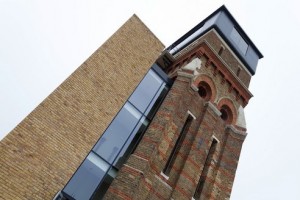
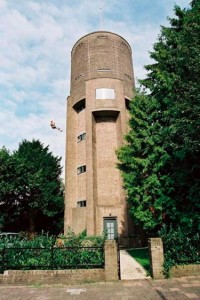
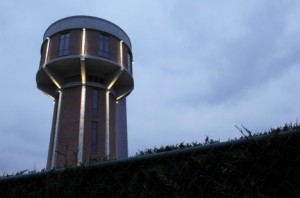
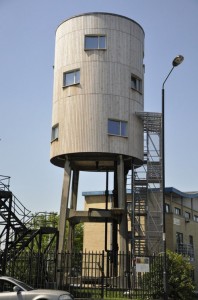
Last week we posted a compilation of creatively sustainable properties; more specifically, a series of old water-towers that were renovated into living spaces rather than destroyed and built upon.

This week we stumbled across a brilliant compilation of images of some of the most remote ‘establishments’ in the world. Some are underwater, others in mountains, and others in remote desert and arctic areas. Below are a few of our favourites from the full series, courtesy of Gizmodo.

Porer Lighthouse – Eastern Adriatic Sea


Buddhist Shrine – Chang La Pass, 5360m elevation


NASA Radome – McMurdo Station, Antarctica


Concordia Research Station – Antarctica, 3200m elevation


Tekite I Habitat – Great Lameshur Bay, Saint John, U.S. Virgin Islands

It’s typical of our culture to replace rather than reuse; this applies in all areas, such as clothing, vehicles, food, housing, and more. We live in an essentially ‘disposable society’ where the norm is to replace or be rid of items that are arguably dated or ‘useless’ rather than exploring their potential for renewed usage. Another example is buyers who purchase properties simply to demolish and rebuild on the same land rather than building on the existing residence’s foundation or making renovations and improvements to it instead of executing an entire rebuild.

Developments such as water towers, which were a social necessity once-upon-a-time, tend to fall through the cracks of time, awaiting their impending demolition days to make way for new developments, homes, businesses, etc. However, it would appear that the concept of re-vamping older buildings rather than destroying them seems to be catching in some circles; and though these may not be the most practical lodgings, they regardless set a positive precedent for prospective investors and developers alike in terms of sustainable consciousness and development.

Instead of destroying these old structures, investors and developers have transformed each of the following water towers into appealing lodgings, while avoiding the costly and ineffective process of deconstruction and reconstruction. To learn more about each of these modernized water towers, just click the links below the photo to go to their original articles.

all images and articles courtesy of TreeHugger.com


http://www.treehugger.com/green-architecture/water-tower-converted-superluxe-london-home.html


http://www.treehugger.com/sustainable-product-design/water-tower-house-by-jo-crepain.html


http://www.treehugger.com/sustainable-product-design/water-tower-repurposed-into-house-with-lots-of-stairs.html


http://www.treehugger.com/green-architecture/tom-dixons-water-tank-house.html