Last week we posted a compilation of creatively sustainable properties; more specifically, a series of old water-towers that were renovated into living spaces rather than destroyed and built upon.

This week we stumbled across a brilliant compilation of images of some of the most remote ‘establishments’ in the world. Some are underwater, others in mountains, and others in remote desert and arctic areas. Below are a few of our favourites from the full series, courtesy of Gizmodo.

Porer Lighthouse – Eastern Adriatic Sea


Buddhist Shrine – Chang La Pass, 5360m elevation


NASA Radome – McMurdo Station, Antarctica


Concordia Research Station – Antarctica, 3200m elevation


Tekite I Habitat – Great Lameshur Bay, Saint John, U.S. Virgin Islands

An article released by the National Post this morning is bringing a particular amount of attention to the world of real estate marketing.

A Calgary, AB, based real estate agent recently released a billboard advertisement that’s been drawing a lot of attention; whether that attention’s a good or bad thing we’re still unsure. The billboard featured a photo of the young female agent Diana Arvatescu with the caption ‘Let Me Take You Home, It’s Gorgeous Inside’ as the message of the ad.

What started out as a clever innuendo campaign has now developed into a critique of the appropriateness of this style of advertising, and it’s place in real estate, as critics believe it to be too sexually implying and could put the agent in danger as a result.

Though critics may be overly assumptive in predicting that harm would come to the young Diana, the larger issue now is where the boundaries are to be drawn regarding appropriate advertising in a relatively conservative industry such as real estate.

What are your thoughts on this campaign? Is Diana going too far, or simply adding some spice to a bland industry? Comment below or let us know your thoughts on Twitter @enviromint.


image courtesy of huffingtonpost.ca

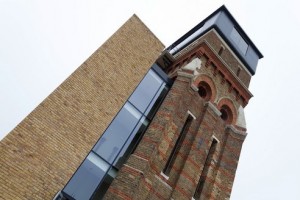
It’s typical of our culture to replace rather than reuse; this applies in all areas, such as clothing, vehicles, food, housing, and more. We live in an essentially ‘disposable society’ where the norm is to replace or be rid of items that are arguably dated or ‘useless’ rather than exploring their potential for renewed usage. Another example is buyers who purchase properties simply to demolish and rebuild on the same land rather than building on the existing residence’s foundation or making renovations and improvements to it instead of executing an entire rebuild.

Developments such as water towers, which were a social necessity once-upon-a-time, tend to fall through the cracks of time, awaiting their impending demolition days to make way for new developments, homes, businesses, etc. However, it would appear that the concept of re-vamping older buildings rather than destroying them seems to be catching in some circles; and though these may not be the most practical lodgings, they regardless set a positive precedent for prospective investors and developers alike in terms of sustainable consciousness and development.

Instead of destroying these old structures, investors and developers have transformed each of the following water towers into appealing lodgings, while avoiding the costly and ineffective process of deconstruction and reconstruction. To learn more about each of these modernized water towers, just click the links below the photo to go to their original articles.

all images and articles courtesy of TreeHugger.com


http://www.treehugger.com/green-architecture/water-tower-converted-superluxe-london-home.html


http://www.treehugger.com/sustainable-product-design/water-tower-house-by-jo-crepain.html


http://www.treehugger.com/sustainable-product-design/water-tower-repurposed-into-house-with-lots-of-stairs.html


http://www.treehugger.com/green-architecture/tom-dixons-water-tank-house.html

One of the main issues with the market right now (besides it’s obviously ‘flattened’ state) is that people can’t seem to come to terms with the fact that their property isn’t worth as much as they think it should be. Startling, but true. This mentality unfortunately appears to be budding because, for some reason or another, sellers seem to think that by selling for less than what their property was worth when the market peaked (or less than their own made-up magical number), that they’re going to be out on the street once they sell, unable to afford a suitable home…Newsflash: The whole market’s doing bad, not just your property.

When the market takes a dive the only way to build it back up is for the inventory to keep moving…otherwise we just end up with a bunch of broke angry people who’ll die of old age in the properties they never sold. It’s a very rugged reality, and we’re compassionate for you, but by sitting there and trying to force a high market price for your property, you: a) aren’t going to sell your place, because (surprise!) the comparable market value of similar properties will obviously be set lower, leaving no buyer in their right mind with a reason to spend another $30k-$50k on your property, and b) contributing to what’s turning into a serious housing traffic jam.

Whether you like it or not, as a seller, you can make a choice. You can choose to sell your place, deal with the loss, get a new one, wait for the market to recover and cash in then; OR, you can stick it out, stay grumpy, and hope that you’re still around when your property value finally ‘comes back’.

So, this goes out to all sellers who are giving buyers headaches with this issue: Please keep in mind that it’s not just your listing price that’s low. It’s everybody’s. Just by taking a bit of a dive from your ‘magical number’ doesn’t mean you’re going to be homeless. It means you’re going through the market recovery motions. You’ll still be able to find a new place at a reasonable price, so don’t sweat it and bite the bullet already! After all, they call it a competitive market for a reason.


image courtesy of skidkid

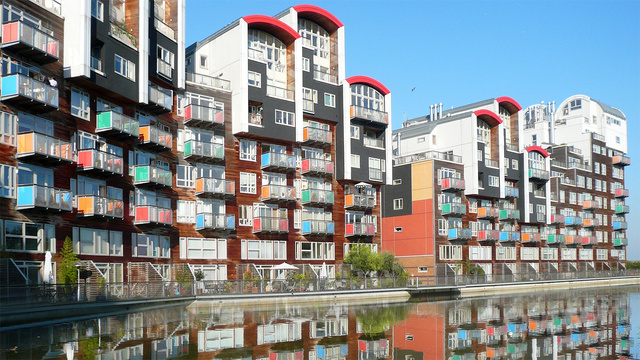
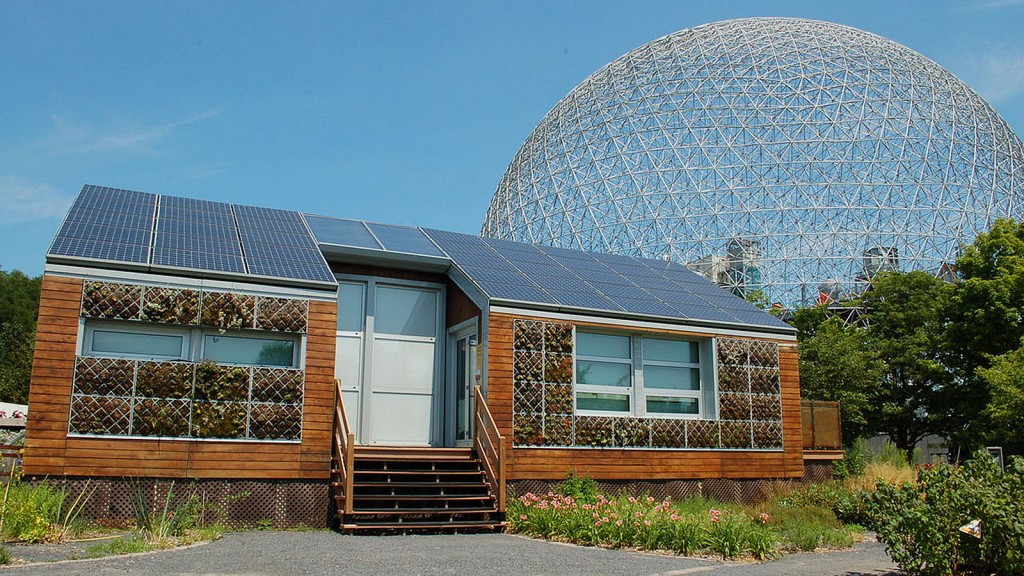
Gizmodo recently compiled a photographic series of sustainable and eco-friendly houses from around the globe and we enjoyed them so much there was no way we weren’t going to share them with you. Follow the link below to check out the rest of these beautiful and interesting houses. Here’s some of our favourites:

Greenwich Millenium Eco Village, London


Richard Carbonnier’s tubular eco-house in Pond Inlet, Baffin Island, Nunavut, Canada


Eco house, Parc Jean Drapeau, Montreal


Check out the rest of these interesting eco-houses right here: http://gizmodo.com/5978598/21-amazing-off+the+grid-houses

Gizmodo featured an article this morning that caught our immediate attention – a walk-through of a 350 square foot apartment that’s been customized to fold and expand into up to eight different rooms. To boot, the apartment’s owner is the founder of treehugger.com.

The reason this landed to well with us is the obviousness of how innovative apartment designs such as this one is the shift in direction we should be going to secure a sustainable future. Not only does the space serve multiple uses in such a confined space, but the ability to do so may be exactly the innovative construction method required to prevent future housing shortage crises.

Maximizing this amount of space is not only effective for the inhabitant, but for the rest of the building, as if each apartment were optimized in such a manner it would be startling how much smaller the building would in fact need to be. In other words, we should consider this method in order to improve the number of apartments that are able to be developed within new buildings as large expansive spaces become a thing of the past…maybe.

Obviously there will always be a market for more outlandish properties. However, if the option were readily available to optimize a living space in the same way as the apartment in the video below, it wouldn’t be surprising if there were a positive shift towards this design alternative in order to save money on square footage, and to take full advantage of every inch.

GIZMODO – The Tiny Transforming Apartment That Packs Eight Rooms into 350 Square Feet from Gizmodo on Vimeo.

For more real estate and environmental news, follow us on Twitter @enviromint.

image courtesy of Gizmodo.

Technology has revolutionized many industries throughout the course of time. It’s permitted for the development of new realms of employment and opportunity, while simultaneously doing the exact opposite. We’ve replaced bank tellers with ATM’s, cashiers with automatic registers, industrial workers with computerized assembly lines and manufacturing technologies, accountants with accounting software, and now potentially real estate agents with online buying and selling platforms.

Services such as BuyerCurious.com are clearly out to replace the age of the agent. This web-based platform allows for buyers and sellers to execute efficient real estate transactions and services while taking agents out of the picture in every aspect. Why? To remove the commission rates and keep more money in everybody’s pockets. Well…everyone except the agents. Though this service hasn’t reached Canada yet, one can only predict that the appeal this style of product offering has will entice the development of a Canadian version thereof in the near future.

The livelihood of real estate agents is sadly coming to a crossroads where the incessant usability improvements and revolutionary concepts applied to publicly available online services are threatening their existence. So now we need to ask ourselves: Will real estate agents make like the dinosaurs and run from the asteroid, or rise up and literally fight the machine?

This question has no easy answer, but it’s becoming very clear that if real estate agents want to stick around and justify the commission rates they reap they need to pick up their socks and present unprecedented value and services to their clients; things that websites and computers will never be able to provide. Obviously commission rates are a touchy topic, hence the public’s weening away from them, so to earn these rates agents need to renew their personas into that of marketing experts on their clients’ behalf rather than playing the typical role an overpaid tour guide.

To stand the test of time agents need to step up their game or pack up their things…there doesn’t seem to be much middle-ground at this point. Have some ideas on how agents can overcome this technology wave? Shoot us a reply in the comments below or on Twitter @enviromint.

image courtesy of DucDigital

Well, not fully, but let us at least give you something to get excited about heading into the New Year. We will be re-branding our Real E.Net document, transaction and business management software for real estate, and releasing the anticipated version 2.0 under its new name: Deal Manager.

The new Deal Manager is designed to boost your productivity to a whole new level with unparalleled features in real estate technology like instant updates throughout the transaction process, which will be available in the New Year thanks to our new Deal Tracker; one of the many 2.0 software feature upgrades. Stay tuned everybody, this will be coming your way very soon.

To tease you a bit more about why to get excited about the Deal Manager, allow us to present some of our latest features:

Single Deal Payout

  • Streamlines the payout of commission on a single deal. We’ve merged the batch processing power to a single deal, allowing for quick payouts, calculating agents’ commission and deductions, as well as cheque printing.

Agent Commission Cheque

  • We’ve revamped the cheque creation and presentation of the agent’s stub to include detailed information on the current commission payment. An Agent Revenue Summary is now included on the stub to provide your agents with a compressed and easy to read update of their current year’s progress.

Not enough? Wait until your agents sink their teeth into the Deal Manager to Go, our web app to trump all real estate web apps. Here are some (we can’t give it all away just yet) features of this revolutionary technology.

Commission Deal Calculator

  • Deals entered by agents now have a new powerful commission calculator that takes advantage of Brokerage defaults while allowing custom changes.

New Calendar

  • When entering dates, users now have the option of selecting from a popup calendar for improved efficiency and convenience.

Want more EnviroMint? Check out on Twitter for our latest and greatest in real estate and environmental news @enviromint


image courtesy of paparutzi

You’d think that the market being down in the dumps would be something to worry about, but according to new theories put forth by several economists this could be somewhat of a God-send for real estate recovery.

Like we were saying in our post ‘Collaborative Recovery’, in order for the real estate market to recover, we need to see participation from all areas of society rather than the elite. Well, prices being as low as they currently are could in fact be what we’re looking for to jump-start the climb out of the market’s shriveled state. Couples, young families, or whomever else, have now been granted the opportunity of a low-cost housing index (for the most part) which is exactly the type of stimulus the market needs to recover. The low prices could very well be the icing on the cake for a lot of potential young buyers, who may otherwise not have been able to afford a home. Now that mortgage rates are so low and housing prices having practically never been lower (at least for quite some time), we may finally start to see the collaborative initiative required for a wholesome market recovery.

Through this, theories are also being put forth suggesting that the Canadian market won’t take a second dive like our neighbours to the South as statistics put forth suggesting a second crash were in fact misconstrued and did not account all factors, especially when compared to the US market. For example, the debt-to-income ratio, when compared to the US, didn’t take into account the amount of extra benefits Canadians receive through their debt such as healthcare and other subsidized services that the US doesn’t provide, therefore weighting economic predictions in a direction that may not be entirely comparable after all.

The only way to tell if any of these theories come true, is of course time. However, the prospects being put forth don’t seem shy of being on the right track…we hope.

For more real estate and environmental news, follow us on Twitter @enviromint.


image courtesy of USACE-Sacramento District


Before it’s too late, many areas in the United States are making serious revisions to their infrastructure’s ability to withstand the augmenting rate of natural disasters, which are presumably directly related to issues of climate change.

Not only are new developments being re-assessed in this light, but current developments as well, such as bridges and highways. This is presumably leading into a new realm of developmental concepts across the board – buildings, bridges, highways, dams, and much more. Given the current nature of climate disasters, we aren’t in the clear, and need to make preparations for when the worst shows up; and at this point, the latter seems inevitable.

The way of the future lies in developing structures designed not only to withstand time, but the elements as well, to prevent the need for re-construction in the event of a natural disaster. This style of construction is a perfect example of sustainable design in both these aspects. Development must achieve levels of sustainability in order to avoid reconstruction after X amount of years, while being developed stronger than ever before. The challenge bar has been set…so now we wait.

For more environmental and real estate news, follow us on Twitter @enviromint.


image courtesy of TANAKA Juuyoh